Sophos EDR
Overview
Sophos EDR monitors, detects and mitigates threats on endpoints. This EDR reduces the attack surface and prevents attacks by using anti-exploit, anti-ransomware, and advanced control technologies.
This setup guide shows how to forward device assets from Sophos EDR to Sekoia.io.
- Vendor: Sophos
- Product: SentinelOne EDR
- Supported environment: Cloud
Configure
Create SOPHOS EDR Credentials
Warning
If you have a "Partner" or "Organization" entity, you need to do the following procedure on every tenant attached to it. Please find more information on the official documentation
In the Sophos Central Admin console:
- On the left panel, go to
Global Settingsand selectAPI Credentials Management. - Click on
Add Credentialto create a credential dedicated to Sekoia.io. - Give it a name, select the role
Service Principal ReadOnlyand click onAdd. - In the
API credential Summary, copy theClient IDand theClient Secret. It will be used later in Sekoia.io to retrieve the events.
Create your asset connector
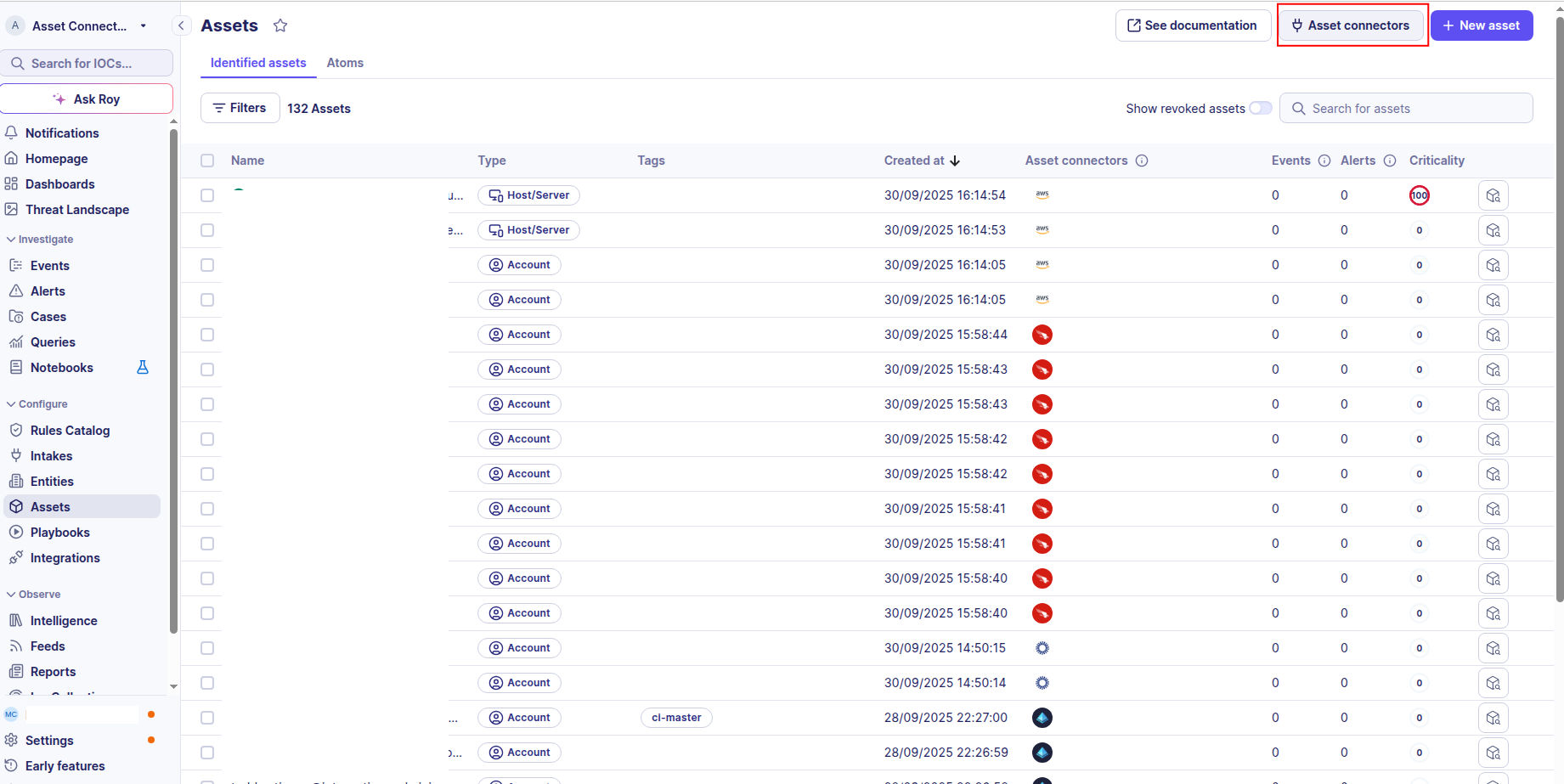
To start getting your Sophos assets into Sekoia.io, you need to create an asset connector on the Assets page. To do so, follow these steps:
-
Click the Asset connectors button to create a new connector.
-
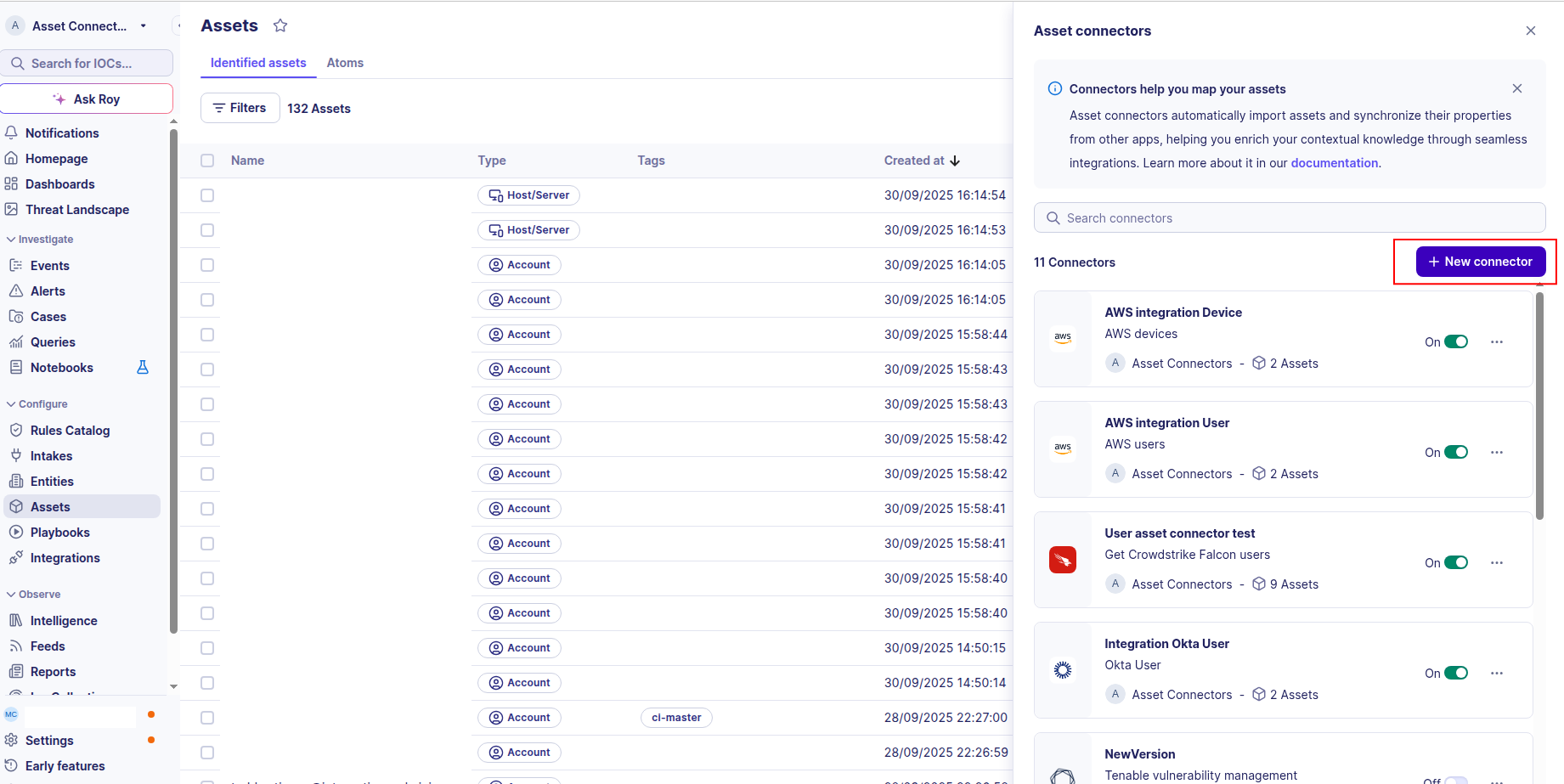
Click the + New connector button.
-
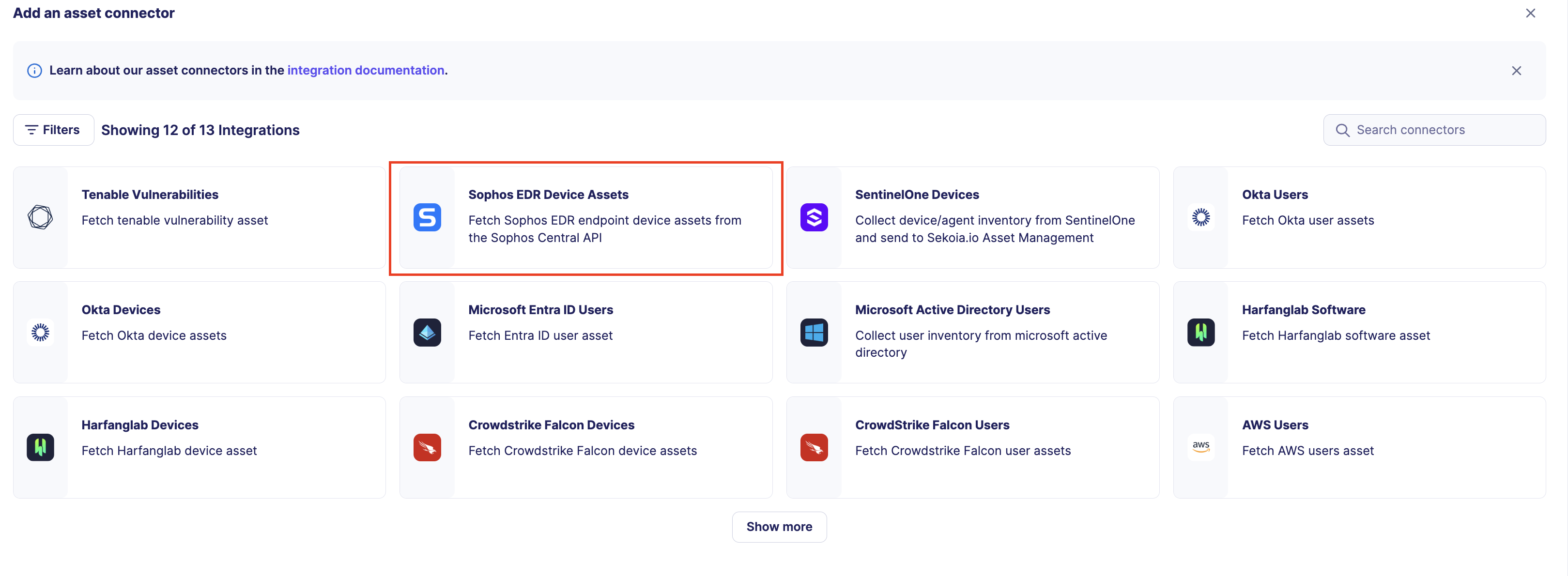
Choose Sophos EDR, give it a name, and fill the required fields in the account field:
- Account name: The name of the Sophos EDR account you want to connect to.
- Client ID: The client ID of the API credential you created in the Sophos Central Admin console.
- Client Secret: The client secret of the API credential you created in the Sophos Central Admin console
- API Host: The API host URL of your Sophos EDR instance.
-
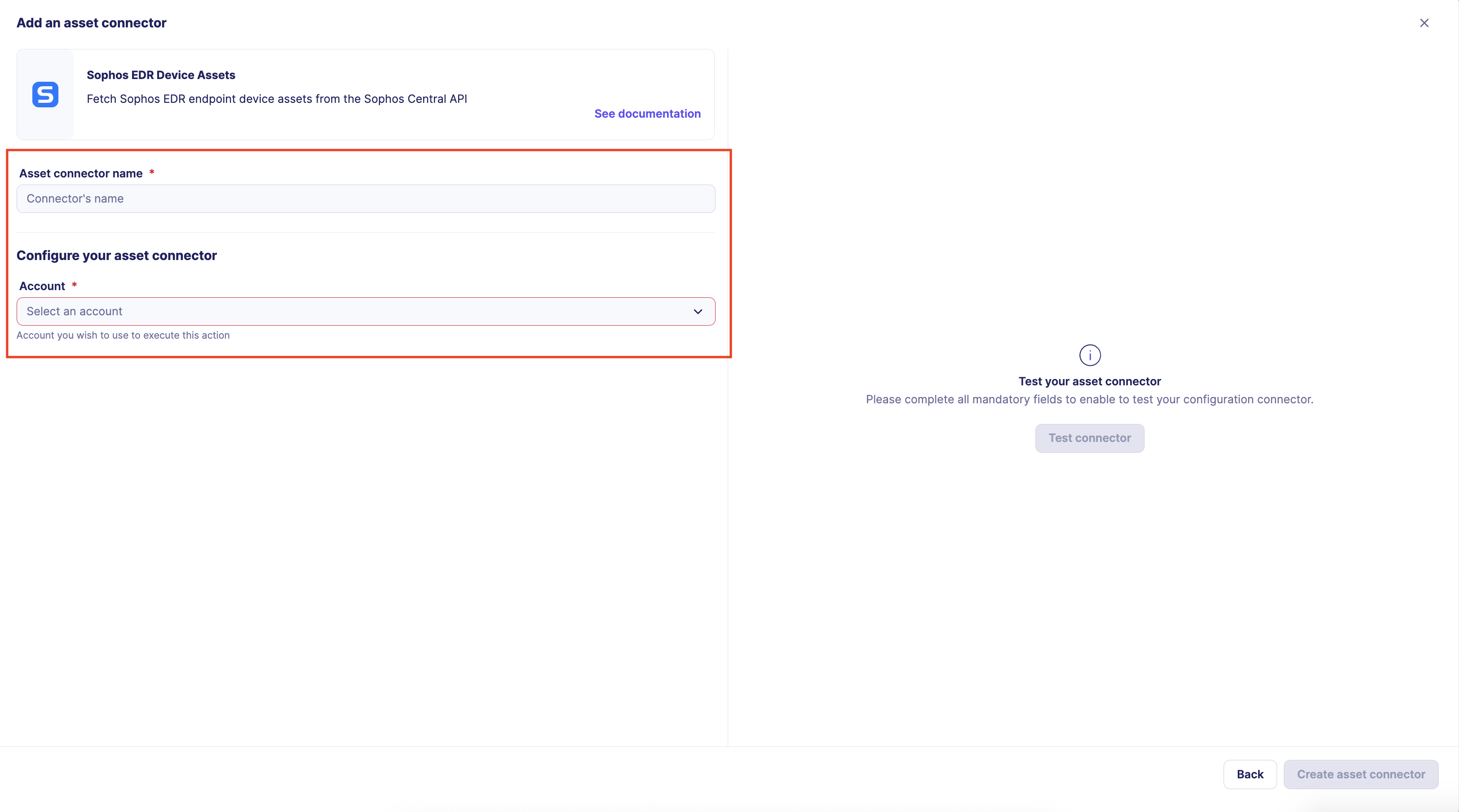
Test the connection by clicking the Test connector button.
-
Click the Create asset connector button.
OCSF Mapping for Sophos EDR Device Assets
OCSF Class: Device Inventory Info
Class UID: 5001
OCSF Version: 1.6.0
Information Collected
The Sophos EDR Device Assets fetches comprehensive information and transforms it into the OCSF (Open Cybersecurity Schema Framework) format for standardized security monitoring and asset management.
API Response Examples
Sophos EDR endpoint sample
Sample endpoint data from Sophos Central API GET /endpoint/v1/endpoints
{
  "id": "00000000-0000-0000-0000-000000000001",
  "type": "computer",
  "tenant": {
    "id": "00000000-0000-0000-0000-000000000010"
  },
  "hostname": "example-workstation",
  "health": {
    "overall": "bad",
    "threats": { "status": "good" },
    "services": { "status": "bad" }
  },
  "os": {
    "isServer": false,
    "platform": "windows",
    "name": "Windows 10 Pro",
    "majorVersion": 10,
    "minorVersion": 0,
    "build": 19044
  },
  "ipv4Addresses": ["192.0.2.10"],
  "ipv6Addresses": [],
  "macAddresses": ["00:00:5E:00:53:01"],
  "tamperProtectionEnabled": true,
  "mdrManaged": false,
  "associatedPerson": {
    "name": "example-workstation\\\\user",
    "id": "00000000-0000-0000-0000-000000000020"
  },
  "group": {
    "id": "00000000-0000-0000-0000-000000000030",
    "name": "Workstations"
  },
  "lastSeenAt": "2024-01-07T06:26:08.668Z",
  "registeredAt": "2023-06-26T10:28:08.836Z",
  "online": false,
  "cloud": { "provider": "azure", "instanceId": "00000000-0000-0000-0000-000000000040" },
  "isolation": { "status": "notIsolated", "adminIsolated": false, "selfIsolated": false }
}
Data Mapping Table
The following table shows how source data is mapped to OCSF model fields:
| Source Field | OCSF Field Path | Description | Data Type | Logic |
|---|---|---|---|---|
static: 2 |
activity_id |
OCSF activity ID – always 2 for Collect | integer |
- |
static: Collect |
activity_name |
OCSF activity name | string |
- |
static: Discovery |
category_name |
OCSF category name | string |
- |
static: 5 |
category_uid |
OCSF category UID | integer |
- |
static: Device Inventory Info |
class_name |
OCSF class name | string |
- |
static: 5001 |
class_uid |
OCSF class UID | integer |
- |
static: 500102 |
type_uid |
OCSF type UID | integer |
- |
static: Device Inventory Info: Collect |
type_name |
OCSF type name | string |
- |
static: Informational |
severity |
Event severity | string |
- |
static: 1 |
severity_id |
OCSF severity ID | integer |
- |
lastSeenAt |
time |
OCSF event timestamp | timestamp |
Convert ISO 8601 to Unix epoch; fallback to registeredAt then now() |
static: Sophos EDR |
metadata.product.name |
Source product name | string |
- |
static: N/A |
metadata.product.version |
Product version | string |
- |
static: 1.6.0 |
metadata.version |
OCSF schema version | string |
- |
id |
device.uid |
Sophos endpoint UUID | string |
- |
hostname |
device.hostname |
Device hostname | string |
- |
hostname |
device.name |
Device name (same as hostname) | string |
- |
type |
device.type / device.type_id |
OCSF device type | string |
computer → Desktop (2), server → Server (1), else Unknown (0) |
os.platform |
device.os.type / device.os.type_id |
OCSF OS type | string |
windows→Windows(100), linux→Linux(200), macos→macOS(300), android→Android(201) |
os.name |
device.os.name |
Full OS name (e.g. 'Windows 10 Pro') | string |
- |
ipv4Addresses[0] or ipv6Addresses[0] |
device.ip |
Primary IP address | ip |
Prefer first IPv4; fallback to first IPv6 if no IPv4 available |
ipv4Addresses[] |
device.network_interfaces[].ip |
Network interface IPv4 addresses | ip |
One NetworkInterface per IPv4; paired with matching MAC by index; hostname set on first interface only |
ipv6Addresses[] |
device.network_interfaces[].ip |
IPv6 network interface addresses | ip |
Additional interfaces for IPv6 addresses (appended after IPv4 interfaces) |
macAddresses[] |
device.network_interfaces[].mac |
Network interface MAC addresses | string |
- |
hostname |
device.network_interfaces[0].hostname |
Hostname on primary interface only | string |
- |
group[].id / group[].name |
device.groups[].uid / device.groups[].name |
Device group membership (Sophos group field) | object |
Map Sophos group array (each with id and name) to OCSF Group objects; only groups with a name are included |
tenant.id |
device.org.uid / device.org.name |
Sophos tenant UUID used as both uid and name (no display name available from API) | string |
- |
cloud.provider |
device.region |
Cloud provider (azure, aws, gcp, …) | string |
- |
associatedPerson.name |
device.desc |
Associated user login name set as device description | string |
- |
registeredAt |
device.first_seen_time / device.created_time |
Endpoint registration date – used for both first_seen_time and created_time | timestamp |
- |
lastSeenAt |
device.last_seen_time |
Last seen date | timestamp |
- |
static: True |
device.is_managed |
Always true – device is enrolled in Sophos Central | boolean |
- |
health.overall |
device.is_compliant |
Device health / compliance status | boolean |
good→True, bad/suspicious→False, else None |
health.overall + isolation.status + tamperProtectionEnabled |
device.is_trusted |
Computed trust status based on isolation, health and tamper protection | boolean |
Calculated with 3 fields health.overall, isolation.status and tamperProtectionEnabled |
lastSeenAt (max across all items in collection run) |
context.last_seen_cursor |
Incremental collection checkpoint | string |
The most recent lastSeenAt ISO string seen during a collection run is persisted as the checkpoint. On the next run, this value is passed as lastSeenAfter query parameter to avoid re-fetching already-seen devices. |
tamperProtectionEnabled |
enrichments[0].data.Firewall_status |
Tamper-protection / firewall-like status | string |
true→Enabled, false→Disabled; used as proxy for endpoint protection status |
static: compliance |
enrichments[0].name |
Enrichment type name | string |
- |
static: hygiene |
enrichments[0].value |
Enrichment value | string |
- |
OCSF Model Structure
Device Inventory Info – Sophos EDR
Transformed Sophos endpoint to OCSF Device Inventory Info
{
  "activity_id": 2,
  "activity_name": "Collect",
  "category_name": "Discovery",
  "category_uid": 5,
  "class_name": "Device Inventory Info",
  "class_uid": 5001,
  "type_name": "Device Inventory Info: Collect",
  "type_uid": 500102,
  "severity": "Informational",
  "severity_id": 1,
  "time": 1704610568,
  "metadata": {
    "product": { "name": "Sophos EDR", "version": "N/A" },
    "version": "1.6.0"
  },
  "device": {
    "uid": "00000000-0000-0000-0000-000000000001",
    "hostname": "example-workstation",
    "name": "example-workstation",
    "desc": "example-workstation\\user",
    "type": "Desktop",
    "type_id": 2,
    "os": { "name": "Windows 10 Pro", "type": "windows", "type_id": 100 },
    "ip": "192.0.2.10",
    "network_interfaces": [
      {
        "hostname": "example-workstation",
        "ip": "192.0.2.10",
        "mac": "00:00:5E:00:53:01",
        "name": "eth0"
      }
    ],
    "groups": [
      {
        "uid": "00000000-0000-0000-0000-000000000030",
        "name": "Workstations"
      }
    ],
    "org": {
      "uid": "00000000-0000-0000-0000-000000000010",
      "name": "00000000-0000-0000-0000-000000000010"
    },
    "region": "azure",
    "is_managed": true,
    "is_compliant": false,
    "is_trusted": false,
    "first_seen_time": 1687773488,
    "created_time": 1687773488,
    "last_seen_time": 1704610568
  },
  "enrichments": [
    {
      "name": "compliance",
      "value": "hygiene",
      "data": { "Firewall_status": "Enabled" }
    }
  ]
}